Safeguarding protects people from harm. It also tells you everything about whether an organisation actually lives its stated values or just reports on them. Ask any organisation whether safeguarding matters and you'll get the same answer: of course it does.
Ask them how safeguarding information is currently managed and the picture often looks very different. Emails. Spreadsheets. Handwritten notes in different departments. No single view of what's been raised, what's been followed up, or what patterns might be emerging.
This isn’t negligence. It’s what often happens when safeguarding is treated more as a compliance task rather than a strategic system though some organisations have already bridged that gap.
Why safeguarding belongs in your ESG framework
ESG reporting has matured significantly over the past decade. Environmental commitments and governance structures now receive serious scrutiny. The Social pillar, however, remains underdeveloped in many organisations, particularly around the protection of vulnerable people.
Safeguarding sits at the heart of what "social responsibility" should actually mean. It covers the protection of children and vulnerable adults, workforce wellbeing, accountability for how concerns are handled, and the culture that surrounds all of it.
An organisation that handles safeguarding well is demonstrating something more meaningful than policy compliance. It's demonstrating that its values operate under pressure.
The difference between reactive and proactive
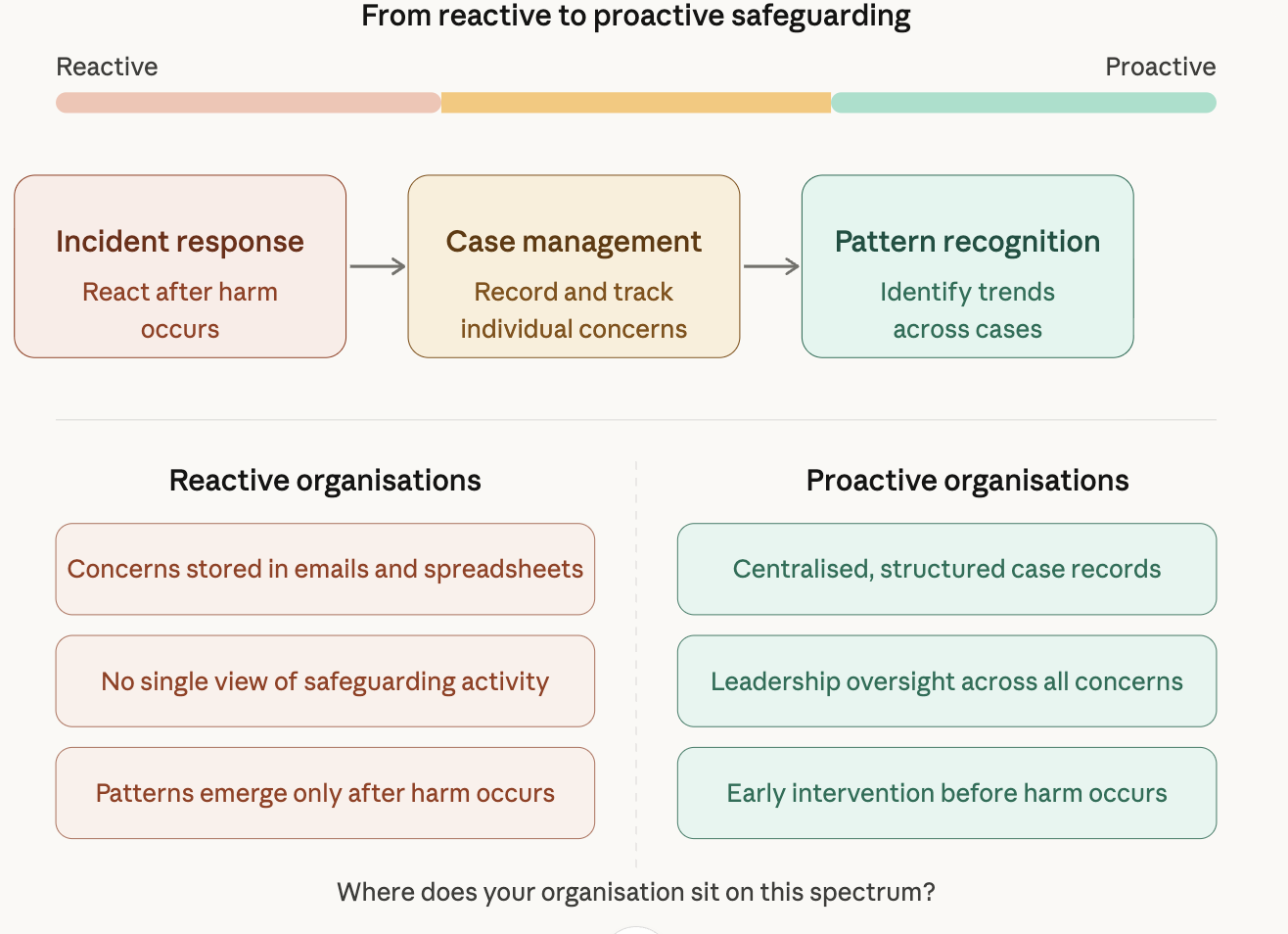
Many organisations are better at responding to safeguarding incidents than preventing them. It’s understandable, incidents demand attention, but structural work can sometimes be deprioritised.
Proactive safeguarding means being able to see patterns before they become incidents. That requires safeguarding information to be centralised, structured, and visible, not scattered across inboxes and filing systems.
When information is fragmented, it's extremely difficult to ask even basic questions: Are certain types of concerns increasing? Are the same individuals or settings appearing repeatedly? Are concerns being followed up consistently?
These aren't difficult questions. But they require a system capable of answering them.
Prevention is the measure that matters most
The organisations with the strongest safeguarding cultures share something in common: they don’t measure success solely by incidents managed, but by the risks identified early enough to prevent harm.
This is the social value that's hardest to quantify — and therefore most likely to be overlooked in ESG reporting. A near-miss captured and acted on doesn't appear in any incident register. But it may represent the most important outcome a safeguarding system delivers.
What technology can and can't do
Technology doesn't create a safeguarding culture. That requires leadership, training, and professionals who take their responsibilities seriously.
What technology like Patronus Safeguarding can do is remove the structural barriers that prevent safeguarding from working at scale. Clear reporting pathways. Consistent case records. Oversight for leadership teams who need to understand safeguarding activity across the whole organisation.
In short: it makes it easier for the right people to do their jobs well.
A question worth asking
If a regulator, a trustee, or a parent asked you today to demonstrate how your organisation identifies and responds to safeguarding concerns, not in policy, but in practice, how confident would you be in your answer? For many organisations, that question reveals a gap worth closing.
If you’re unsure how safeguarding data is handled in your organisation, start by asking: Is there one place where all safeguarding concerns are recorded and tracked? If not, that’s the first gap to close.
Safeguarding isn't just a social responsibility metric. It's evidence that an organisation's values are operational, not aspirational.
Want to know more about Patronus Safeguarding? or get in touch.